
Lateral hip pain is one of the most common causes of discomfort while walking, sleeping on your side, climbing stairs, or standing for long periods.
Many people receive terms such as:
- hip bursitis
- trochanteric bursitis
- gluteal tendinopathy
- hip inflammation
👉 Although there are small differences between these conditions, in many cases they are closely related and share similar mechanisms of overload and irritation of the lateral hip tissues.
The most common symptoms include:
- pain on the outer side of the hip
- discomfort when lying on the affected side
- pain while walking or climbing stairs
- feelings of weakness or instability around the hip
- discomfort when standing for long periods
- pain that may radiate toward the glute or outer thigh
In most cases, this is not a serious injury, but rather a condition related to the load capacity of the lateral hip tissues, especially the gluteal tendons and trochanteric bursa.
To understand whether your pain may be related to hip bursitis or trochanteric pain syndrome, answer these simple questions.
Do You Recognize These Symptoms?
Do you feel pain on the outer side of your hip? YES / NO
Does the pain increase while walking, climbing stairs, or standing for long periods? YES / NO
Does it hurt when sleeping on the affected side? YES / NO
Do you notice weakness, instability, or discomfort when standing on one leg? YES / NO
Does the pain worsen after long walks, training, or repetitive activities? YES / NO
Test for Lateral Hip Pain (Trendelenburg Test)
Stand in front of a mirror or a wall.
From this position, try to maintain your balance while standing only on the affected leg for a few seconds.
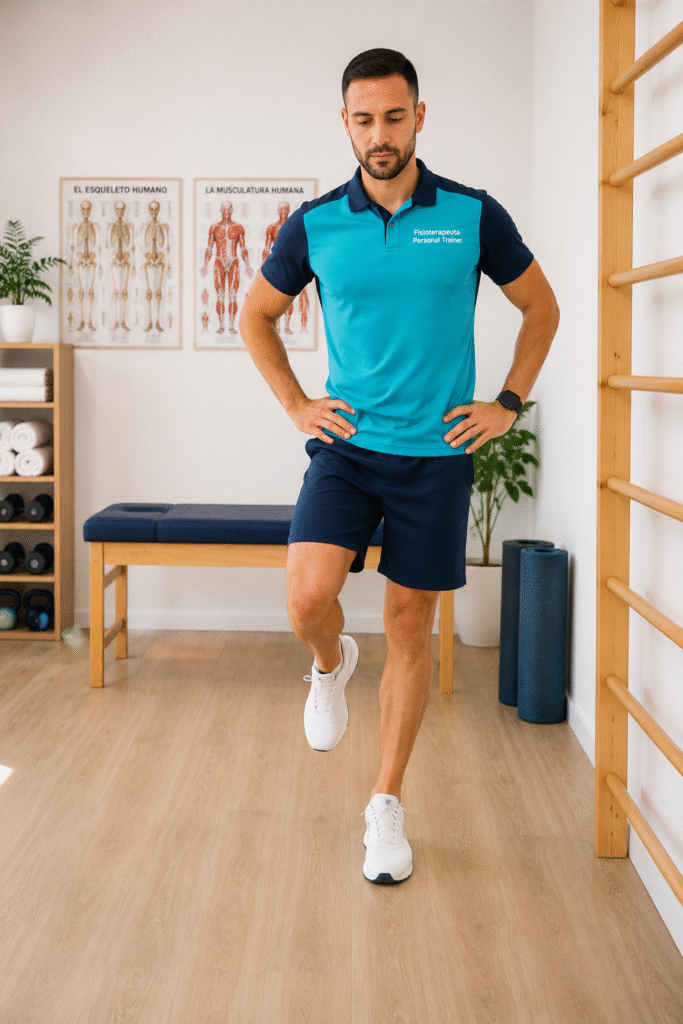
If the test reproduces lateral hip pain, weakness, difficulty keeping the pelvis stable, or discomfort around the lateral gluteal area, there may be involvement of the lateral hip tissues, which is common in hip bursitis, trochanteric pain syndrome, or gluteal tendinopathy.
If you identify with most of these symptoms and the test reproduces your discomfort, you can download our free physiotherapy protocol to help you address the problem in a more targeted and effective way.
Inside the Program You Will Find:
👉 Specific, non-random exercises developed by physiotherapists.
👉 This protocol has been created by physiotherapists specialized in musculoskeletal rehabilitation.

ANTONIO
I am Antonio, a physiotherapist specialising in musculoskeletal conditions and the founder of PhysioCareHub.
- guided physiotherapy progression
- specific work on gluteus medius and pelvic control
- progressive loading exercises
- targeted work on stability and load tolerance
- clear step-by-step explanations
⬇️ Access the specific physiotherapy protocol for hip bursitis and lateral hip pain
If you do not fully identify with these questions, or if the test is unclear, your pain may not be related only to hip bursitis or trochanteric pain syndrome.
In this case, it may be more useful to complete a full hip self-assessment in order to better understand the cause of your problem and choose the most appropriate approach.
⬇️ Download the Complete Hip Self-Assessment
For any questions or if you need support, we are here to help:
📧 support@physiocarehub.eu
ANTONIO