
Resources, exercises and progressive rehabilitation for meniscal injuries
Meniscus injuries are one of the most common causes of knee pain and can affect both younger and older individuals.
Common symptoms may include:
- pain while walking
- discomfort when going up or down stairs
- pain when squatting
- discomfort when twisting on the leg
- stiffness
- occasional sensations of catching, locking, or discomfort during certain movements
However, not all knee pain is caused by a meniscal problem.
For this reason, before starting any exercise program, it is important to better understand whether your symptoms may be consistent with this type of condition.

ANTONIO
I am Antonio, a physiotherapist specialising in musculoskeletal conditions and the founder of PhysioCareHub.
Our philosophy is simple:
Understand the problem and progress step by step.
Could It Be a Meniscal Problem?
The following questions are not intended to provide a medical diagnosis and do not replace an assessment by a healthcare professional, but they may help you better understand your symptoms.
Quick Screening Questions
❓ Do you experience pain when going up or down stairs?
❓ Do you experience pain when twisting on your leg or during sudden changes of direction?
❓ Is your pain mainly located on the inner or outer side of the knee?
Mini Test
Perform a slow and controlled half squat.
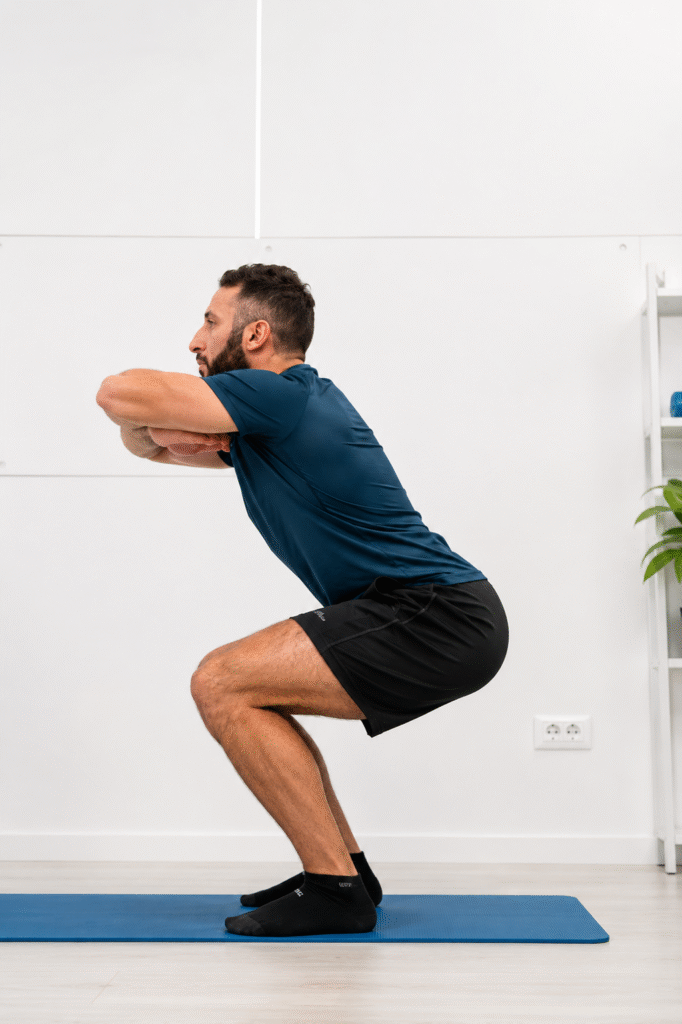
❓ Do you notice pain or discomfort during the movement?
👉 If you identify with several of these situations, you may benefit from a conservative rehabilitation program designed for meniscal problems.
👉 If you do not identify with the symptoms described above, your pain may not be related to a meniscal injury. In that case, you may benefit from a comprehensive knee assessment, which evaluates the joint as a whole. You can find more information through the following link:
PHASE 1 – FREE
The first phase is designed for the initial stages of recovery.
The main goals are to:
✅ improve muscle activation
✅ restore mobility
✅ reduce knee sensitivity to movement
✅ begin tolerating load progressively
Inside the protocol you will find:
- an introductory physiotherapy guide
- strengthening exercises for the quadriceps and hamstrings
- mobility exercises
- load management recommendations
- a simple home-based progression
WHAT HAPPENS NEXT?
Recovery from a meniscus injury often benefits from a gradual progression.
For this reason, this program will continue with additional rehabilitation phases where we will focus on more advanced aspects such as:
✅ gluteal strength and hip control
✅ semi-closed and closed kinetic chain exercises
✅ balance and proprioception
✅ functional knee control
✅ progressive preparation for more demanding activities
The following phases will be available soon and will allow you to continue your rehabilitation process in a structured and progressive way.
Support
If you have any questions, need additional information, or are unsure whether this protocol is right for you, we are here to help.
📧 support@physiocarehub.eu
You do not have to go through this alone.
Antonio
PhysioCareHub