
causes, symptoms, treatment and physiotherapy exercises
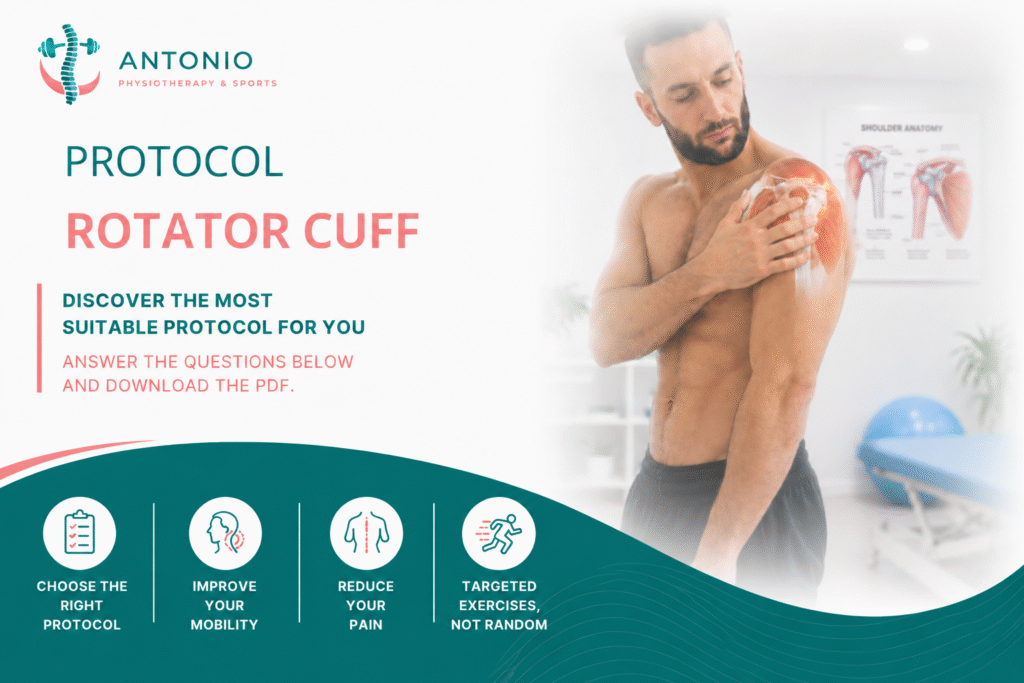
Shoulder pain is one of the most common causes of discomfort during daily activities and sports.
Many people experience pain when:
✅ lifting the arm
✅ sleeping on the affected shoulder
✅ training or carrying weight
✅ reaching for objects
✅ getting dressed or brushing their hair
In many cases, people receive diagnoses such as:
- rotator cuff tendinopathy
- supraspinatus tendinitis
- subacromial impingement
- shoulder inflammation
- painful shoulder syndrome
👉 Although there are some small differences between these conditions, they are often closely related and share similar mechanisms of:
✅ irritation
✅ sensitivity
✅ overload of the shoulder tissues
🔹 What happens in the shoulder?
The shoulder requires good coordination between different structures in order to move the arm in a stable and pain-free way.
The rotator cuff is made up of muscles and tendons that help to:
✅ stabilise the joint
✅ control movement
✅ lift the arm
✅ work during overhead movements
When the load exceeds the tissues’ ability to adapt, discomfort and reduced movement tolerance may appear.
👉 This can happen during:
- gym or training
- repetitive movements
- manual work
- sports
- everyday activities
In some cases, the problem is more related to tendon irritation.
In other cases, there may be increased sensitivity within the subacromial space or compression of certain tissues during movement.
👉 In practice, these structures often work together and symptoms frequently overlap.
🔹 Most common symptoms
People often notice:
- pain when lifting the arm
- discomfort when sleeping on the shoulder
- weakness or loss of strength
- pain during overhead movements
- difficulty training or carrying weight
- stiffness or limited shoulder mobility
- discomfort radiating down the side of the arm
👉 In most cases, this is not a serious injury.
Very often, the problem is related to altered load tolerance and increased sensitivity of the shoulder tissues.
To understand whether your pain may be related to a rotator cuff tendinopathy, answer these simple questions.
🔹 Do you recognise these symptoms?
Do you feel discomfort when lifting the arm or reaching for objects?
YES / NO
Does sleeping on the affected shoulder cause discomfort?
YES / NO
Does the pain appear during exercise, gym training, or repetitive movements?
YES / NO
Do you notice weakness or difficulty placing the arm behind your back?
YES / NO
Do the symptoms increase after certain activities or efforts?
YES / NO
🔹 Quick test for shoulder pain and rotator cuff symptoms
Stand in front of a mirror.
From this position, slowly raise your arm out to the side as far as comfortably tolerated.
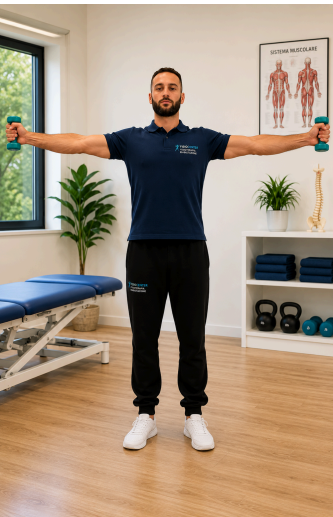
If during the movement you notice:
⚠️ pain
⚠️ pinching sensation
⚠️ weakness
⚠️ difficulty controlling the arm
there may be involvement of the rotator cuff tendons or increased subacromial sensitivity.
👉 If you identify with most of these symptoms and the test reproduces your discomfort, you can download our free physiotherapy protocol to help you address the problem in a more targeted and effective way.
🔹 Inside the protocol you will find
👉 Specific and non-random exercises developed by physiotherapists.
👉 This protocol has been created by physiotherapists specialised in musculoskeletal rehabilitation.
ANTONIO
I am Antonio, a physiotherapist specialising in musculoskeletal conditions and the founder of PhysioCareHub.

✅ guided physiotherapy progression
✅ progressive loading exercises
✅ specific work on the rotator cuff and scapular control
✅ mobility and movement tolerance exercises
✅ clear step-by-step explanations
⬇️ Access the specific physiotherapy protocol for shoulder pain and rotator cuff problems
👉 If you do not completely identify with these questions, or if the test is unclear, your pain may not be related only to the rotator cuff or subacromial impingement.
In this case, it may be more useful to perform a:
✅ complete shoulder self-assessment
to better understand the cause of the problem and choose the most appropriate approach.
⬇️ Download the complete shoulder self-assessment
🔹 Want to continue your recovery?
If you have already completed an initial phase of exercises and want to keep progressing, you can continue with our 4-Week Advanced Rotator Cuff Program.
⬇️ Discover the next step in your program
🔹 SUPPORT
If you have any questions or need help:
📧 support@physiocarehub.eu
👉 We are here to help you.
ANTONIO